EM² Pep
GHK-CU
GHK-CU
Couldn't load pickup availability
GHK-Cu
WHAT IS GHK-Cu?
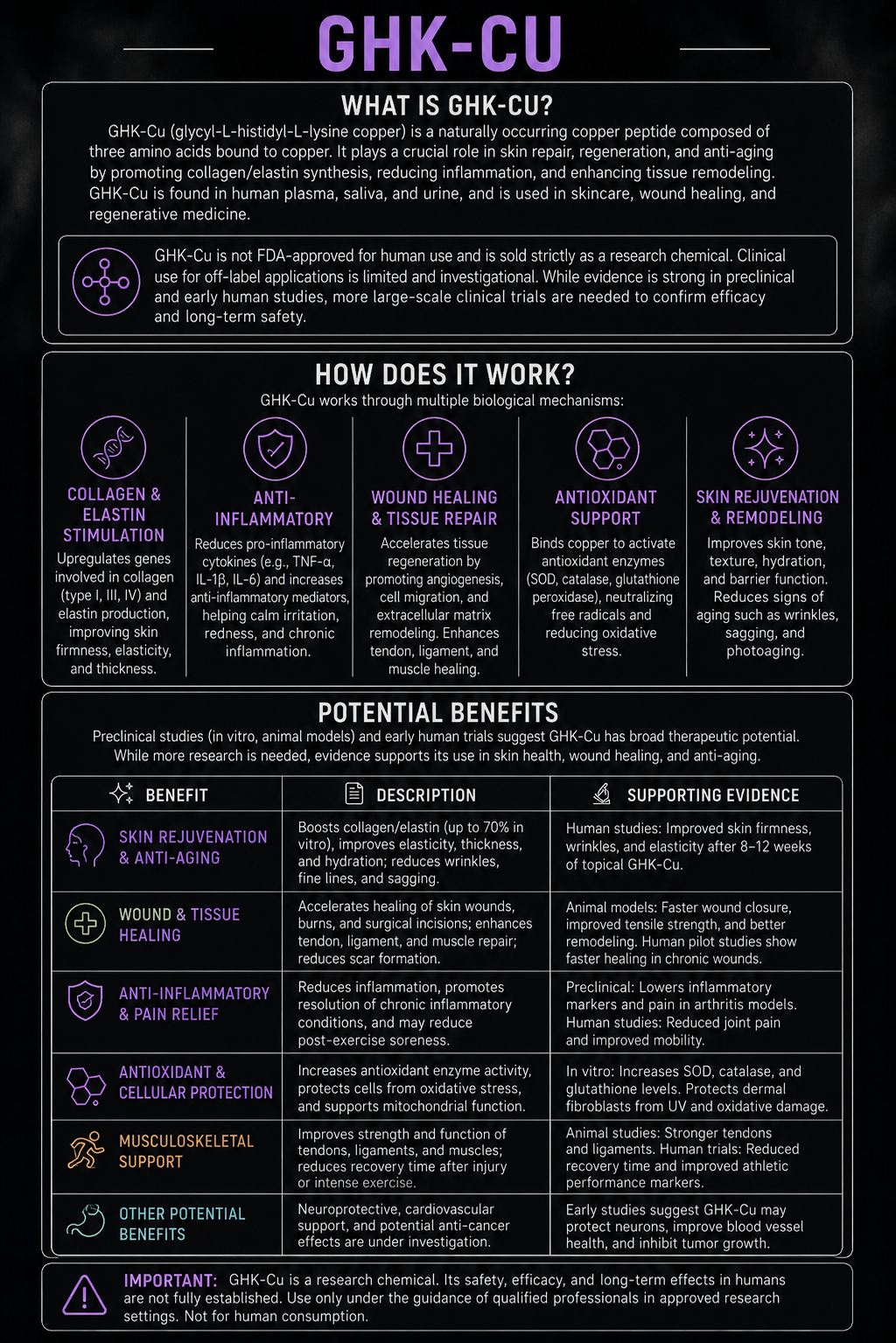
GHK-Cu (glycyl-L-histidyl-L-lysine copper) is a naturally occurring copper peptide composed of three amino acids bound to copper. It plays a role in skin repair, regeneration, and tissue remodeling by promoting collagen and elastin synthesis, reducing inflammation, and supporting wound healing.
GHK-Cu is naturally found in human plasma, saliva, and urine and has been studied for potential applications in skincare, wound healing, and regenerative medicine.
IMPORTANT: GHK-Cu is not FDA-approved as a drug for human use and is commonly sold in research-chemical contexts. Although it has been studied in preclinical research and some early human studies, larger clinical trials are needed to establish its efficacy, appropriate dosing, and long-term safety.
HOW DOES IT WORK?
GHK-Cu works through multiple biological mechanisms:
1. COLLAGEN & ELASTIN STIMULATION
May upregulate genes involved in collagen and elastin production, potentially improving skin firmness, elasticity, thickness, and overall skin structure.
2. ANTI-INFLAMMATORY SUPPORT
May influence inflammatory signaling and reduce certain pro-inflammatory cytokines, potentially helping to calm irritation and support recovery from inflammation.
3. WOUND HEALING & TISSUE REPAIR
May support tissue regeneration by promoting angiogenesis, cell migration, and extracellular matrix remodeling. Research has investigated its potential role in skin, connective tissue, tendon, ligament, and muscle repair.
4. ANTIOXIDANT SUPPORT
By binding copper, GHK-Cu may support the activity of antioxidant enzymes such as superoxide dismutase (SOD), catalase, and glutathione-related systems, potentially helping protect cells from oxidative stress.
5. SKIN REJUVENATION & REMODELING
May improve aspects of skin appearance and structure, including texture, elasticity, hydration, and barrier function. It has also been investigated for potential effects on wrinkles, fine lines, and photoaging.
POTENTIAL BENEFITS
Preclinical studies, animal models, and some early human research suggest that GHK-Cu may have broad regenerative and cosmetic potential. However, the strength of evidence varies by application, and more high-quality clinical research is needed.
SKIN REJUVENATION & ANTI-AGING
Description: May support collagen and elastin production, potentially improving skin elasticity, firmness, thickness, hydration, and the appearance of fine lines and wrinkles.
Supporting evidence: Research on topical GHK-Cu and copper peptides suggests potential improvements in aspects of skin appearance and structure, although results vary and more rigorous clinical studies are needed.
WOUND & TISSUE HEALING
Description: May support healing of skin wounds and tissue injuries by promoting cell migration, angiogenesis, and extracellular matrix remodeling.
Supporting evidence: Preclinical research has shown potential effects on wound closure and tissue regeneration. Human evidence remains more limited.
ANTI-INFLAMMATORY & PAIN SUPPORT
Description: May influence inflammatory pathways and potentially support recovery from inflammatory conditions or tissue injury.
Supporting evidence: Preclinical studies suggest anti-inflammatory activity, but evidence for treating pain or inflammatory diseases in humans is not yet well established.
ANTIOXIDANT & CELLULAR PROTECTION
Description: May support antioxidant enzyme activity and help protect cells from oxidative stress.
Supporting evidence: Laboratory research suggests effects on antioxidant systems and protection against certain forms of oxidative damage.
MUSCULOSKELETAL SUPPORT
Description: May potentially support the repair and remodeling of tendons, ligaments, muscles, and other connective tissues.
Supporting evidence: Animal and laboratory research has investigated GHK-Cu in connective-tissue repair, but robust human clinical evidence is still lacking.
OTHER POTENTIAL BENEFITS
Description: Researchers are investigating possible neuroprotective, cardiovascular, and other biological effects of GHK-Cu.
Supporting evidence: These areas remain experimental, with much of the evidence coming from laboratory and preclinical research.
IMPORTANT
GHK-Cu is an experimental peptide, and its safety, efficacy, optimal dosing, and long-term effects in humans are not fully established. Research findings should not be interpreted as proof that GHK-Cu can treat or cure medical conditions. Use should only be considered with guidance from a qualified healthcare professional and in accordance with applicable regulations.
Share