EM² Pep
Cagrilintide
Cagrilintide
Couldn't load pickup availability
CAGRILINTIDE
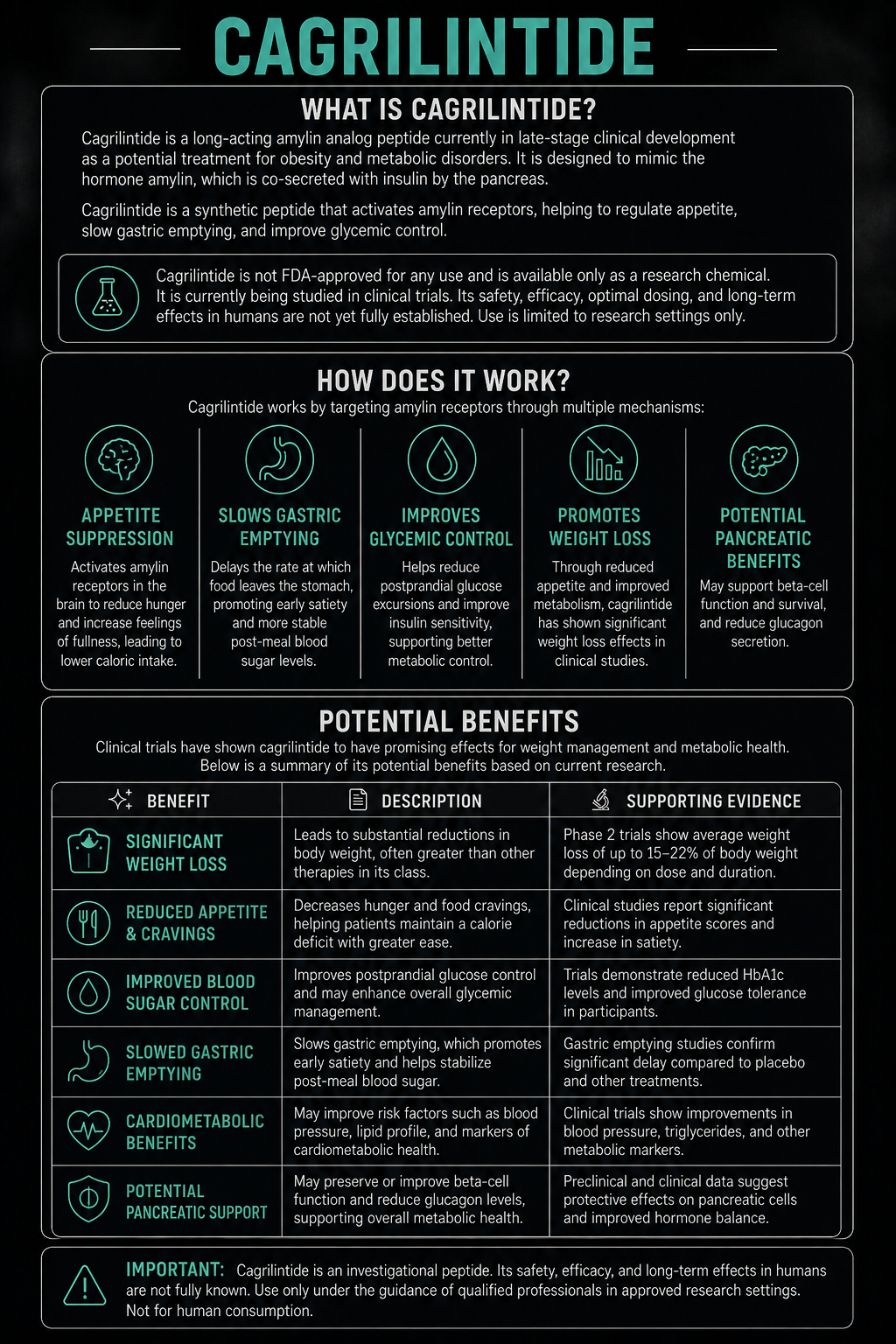
WHAT IS CAGRILINTIDE?
Cagrilintide is a long-acting amylin analogue currently in clinical development for weight management and metabolic disorders. It is designed to mimic some of the actions of the naturally occurring hormone amylin, which is co-secreted with insulin by the pancreas.
Cagrilintide is a synthetic peptide that activates amylin receptors and is being studied for its effects on appetite regulation, food intake, body weight, and metabolic health. The FDA’s substance database classifies cagrilintide as a peptide and amylin analogue.
Cagrilintide is also being studied as part of CagriSema, a combination of cagrilintide and semaglutide that targets complementary metabolic pathways.
IMPORTANT: As of 2026, cagrilintide itself is not FDA-approved for human use. It remains an investigational medicine undergoing clinical development. Its safety, efficacy, optimal dosing, and long-term effects are still being evaluated.
⸻
HOW DOES IT WORK?
Cagrilintide works primarily by activating pathways associated with the hormone amylin:
1. APPETITE SUPPRESSION
Activates amylin-related signaling involved in appetite regulation, which may reduce hunger and increase feelings of fullness, potentially leading to lower food intake.
2. SLOWS GASTRIC EMPTYING
May slow the rate at which food leaves the stomach, helping promote satiety and potentially reducing the desire to eat between meals.
3. SUPPORTS GLYCEMIC CONTROL
Amylin signaling plays a role in regulating post-meal glucose metabolism. Cagrilintide is being studied for its potential effects on postprandial glucose control and broader metabolic health.
4. PROMOTES WEIGHT LOSS
By reducing appetite and food intake, cagrilintide can contribute to weight loss. In a sub-analysis of REDEFINE 1, once-weekly cagrilintide 2.4 mg produced an average 11.8% body-weight reduction versus 2.3% with placebo at 68 weeks under the trial’s treatment-effect analysis.
5. POTENTIAL METABOLIC BENEFITS
Researchers are investigating whether cagrilintide may provide broader benefits related to metabolic health, particularly when combined with other therapies such as semaglutide.
⸻
POTENTIAL BENEFITS
Clinical research suggests that cagrilintide may have potential applications in weight management and metabolic health. However, the evidence is still developing, and not all potential benefits have been definitively established.
SIGNIFICANT WEIGHT LOSS
Description: May produce meaningful reductions in body weight by decreasing appetite and food intake.
Supporting evidence: In REDEFINE 1, cagrilintide 2.4 mg was associated with an average 11.8% weight reduction at 68 weeks versus 2.3% with placebo in the trial’s treatment-effect analysis. Cagrilintide is now being evaluated as a monotherapy in the phase 3 RENEW program.
REDUCED APPETITE & CRAVINGS
Description: May decrease hunger and increase feelings of fullness, making it easier for some individuals to reduce overall calorie intake.
Supporting evidence: Cagrilintide is a long-acting amylin analogue, and amylin is involved in the central regulation of food intake and body weight. Clinical development is focused in part on its potential role in appetite and weight management.
IMPROVED METABOLIC HEALTH
Description: May contribute to improvements in metabolic health through reductions in body weight and effects on appetite and glucose regulation.
Supporting evidence: Ongoing phase 3 studies are evaluating cagrilintide in people with overweight or obesity, including those with type 2 diabetes.
SLOWED GASTRIC EMPTYING
Description: Amylin-based signaling is associated with delayed gastric emptying, which may contribute to increased satiety and reduced food intake.
Supporting evidence: The mechanism of cagrilintide is based on amylin biology, which is involved in appetite regulation and gastrointestinal processes.
CARDIOMETABOLIC POTENTIAL
Description: Weight loss may potentially improve cardiometabolic risk factors, including blood pressure, lipid levels, and other markers of metabolic health.
Supporting evidence: These potential benefits are being investigated in clinical development programs. They should not be considered established therapeutic effects of cagrilintide itself until supported by appropriate clinical evidence.
POTENTIAL BENEFIT IN COMBINATION THERAPY
Description: Cagrilintide may have complementary effects when combined with other weight-management medications, particularly GLP-1 receptor agonists.
Supporting evidence: CagriSema combines cagrilintide with semaglutide. In the REDEFINE 1 trial, CagriSema produced substantially greater average weight loss than either component alone, although CagriSema and cagrilintide are distinct treatment approaches and should not be conflated.
⸻
IMPORTANT
Cagrilintide is an investigational peptide and is not currently FDA-approved as a standalone medication. Its safety, efficacy, optimal dosing, and long-term effects are still being studied. Research findings should not be interpreted as proof that cagrilintide can treat or cure medical conditions.
Cagrilintide should not be used outside appropriate clinical or medical settings without guidance from a qualified healthcare professional. It is also important to distinguish cagrilintide monotherapy from CagriSema, the investigational combination of cagrilintide and semaglutide.
Share